e-Arşiv and e-Fatura 2026–2027: Who Is Covered and How to Switch with Mikro
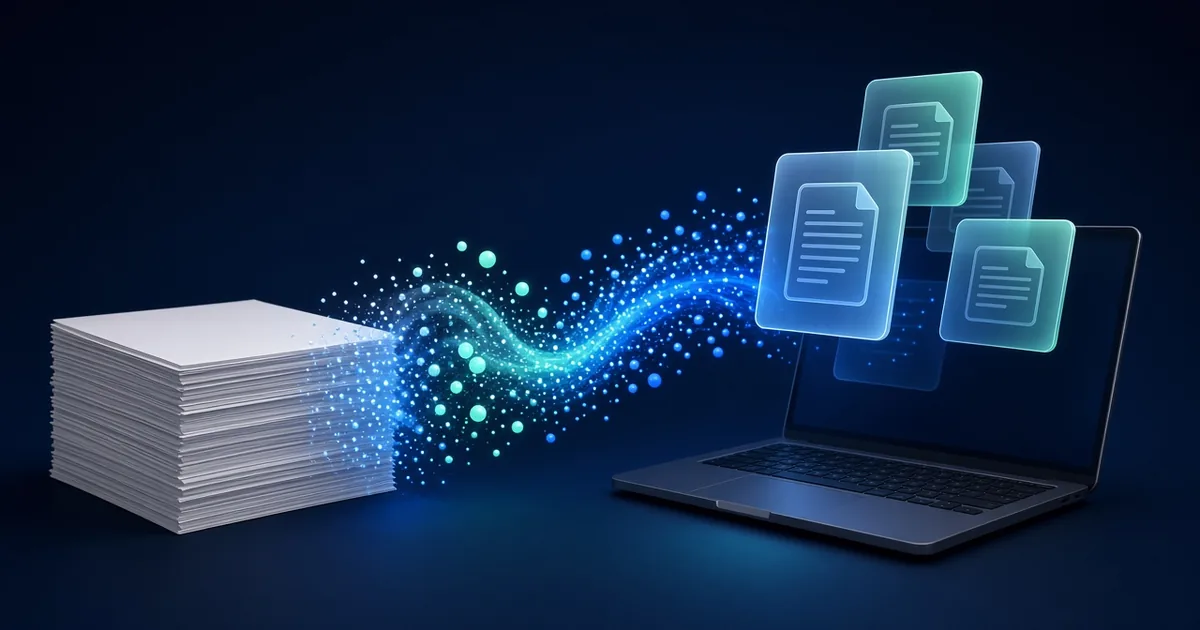
The era of paper invoices is largely coming to an end. The Revenue Administration (GİB) has reorganised the e-Arşiv Invoice rules through Tax Procedure Law General Communiqué No. 589 (VUK). In this article we explain what the rule says, which date applies to you, and how a business using Mikro can plan the switch.
This article is for general information only. Speak to your certified public accountant (mali müşavir) about your own situation, and because legislation can change, check the current text on the GİB website.
The short answer
- From 1 January 2026: Taxpayers not yet included in the e-Arşiv Invoice system must also issue their invoices as e-Arşiv Invoices, regardless of the amount including taxes. In 2025 this rule applied only to invoices exceeding 3,000 TL including taxes.
- Simplified-basis and business-account taxpayers: The 3,000 TL threshold continues until 31 December 2026. From 1 January 2027, the amount makes no difference for these taxpayers either.
- If the other party is an e-Fatura user, the document is issued as an e-Fatura, not an e-Arşiv.
- The exceptions listed in the Communiqué remain reserved.
Source: the current text of Tax Procedure Law General Communiqué No. 509 (VUK) (IV.2.4.3) and Tax Procedure Law General Communiqué No. 589 (VUK), which amended this section (Official Gazette, 31.12.2025, issue 33124, 5th repeated).
The difference between e-Fatura and e-Arşiv
Both documents are electronic invoices; the difference lies with the recipient.
- e-Fatura: Issued when the recipient is also registered in the e-Fatura system. The document reaches the recipient's system via GİB.
- e-Arşiv Invoice: Issued when the recipient is not an e-Fatura user, for example an end consumer or a business not registered in the system. The document can be sent to the recipient by e-mail or as a paper printout.
In Mikro, this distinction is generally made according to the e-Fatura registration information on the customer card; if the setting is correct, the user does not have to choose the type on every invoice.
Which date applies to you?
If you already use e-Fatura and e-Arşiv
The rule change introduces no new obligation for you. Even so, you may need to do something extra in 2026: check whether you have a branch still issuing paper invoices, a field sales team, or any process where invoices are issued by hand.
If you are not covered by e-Arşiv (balance-sheet basis)
Under the Communiqué, from 1 January 2026 you must issue your invoices as e-Arşiv whatever the amount. If you have not yet made the switch, speak to your certified public accountant straight away.
If you are a simplified-basis or business-account taxpayer
The 3,000 TL threshold continues throughout 2026. From 1 January 2027 the amount will make no difference. To avoid leaving the switch to the last week, it makes sense to start preparing in the last quarter of 2026.
Are you required to switch to e-Fatura?
Taxpayers whose gross sales revenue exceeds a certain level, or who operate in certain sectors, are required to switch to e-Fatura. Because these thresholds change over time, we do not quote figures here. Check last year's and this year's revenue with your accountant.
Switching with Mikro: 6 steps
According to Mikro's product comparison page, the e-Fatura, e-Arşiv and e-İrsaliye modules are included in all of the Run, Jump Basic, Jump Bulut, Jump and Fly packages. e-Defter, however, is not available in Run and Jump Basic. So your current Mikro package is most likely sufficient for e-Arşiv; the real work is setting up the configuration and processes correctly.
- Assessment of the current situation: Which documents do you issue, and where? List your use of paper, e-Arşiv, e-Fatura and e-İrsaliye by branch and by user.
- Private integrator or GİB portal decision: To send e-Arşiv through Mikro, you need to work with a private integrator. Also clarify at this step whether you need a financial seal or an e-signature.
- Mikro settings: Series and numbering, e-Fatura registration check on customer cards, e-mail sending template and invoice design.
- Testing: Issue test invoices before sending anything to a real customer. Also try out return, cancellation and correction scenarios.
- Training: Run short, role-based training for everyone who issues invoices. Explain the cancellation and objection processes in particular.
- Go-live and first-month check: In the first month, check weekly for documents that were not sent, were incorrect or were returned.
Common mistakes
- A paper invoice book continuing to be used at a branch or in the field
- The e-Fatura registration information on the customer card being out of date, so the wrong document type is selected
- Not knowing the e-Arşiv cancellation and objection periods
- Leaving the switch to the last week and the integrator application not being completed in time
For more, see our article the most common mistakes in e-Fatura and e-Arşiv migration.
After the switch: save time with automation
Once documents are electronic, automation becomes easier. Importing incoming e-Faturas into Mikro, preparing account reconciliations and reporting on invoice data can all be accelerated with rule-based bots. We describe these steps on our Mikro AI page and in our article on reconciliation and e-Fatura bots. To analyse invoice data, you can use the NimboX Reporting module.
How can Nimbo help?
Nimbo is a Mikro partner serving from a central point on the European side of Istanbul, on the E-5 close to Beylikdüzü. Together with you, we plan the e-Fatura, e-Arşiv and e-İrsaliye settings, the testing process and user training on Mikro. In distant areas such as Silivri, we carry out the switch largely through remote connection. Our support line, 0850 335 00 30, is open Monday–Saturday 08:30–18:00.
Frequently asked questions
Is e-Arşiv required in 2026 for invoices under 3,000 TL too?
Under Tax Procedure Law General Communiqué No. 589 (VUK), for taxpayers not included in e-Arşiv the amount makes no difference from 1 January 2026. For simplified-basis and business-account taxpayers, the 3,000 TL threshold continues until 31 December 2026. The exceptions in the Communiqué remain reserved.
When do simplified-basis taxpayers move to e-Arşiv regardless of amount?
From 1 January 2027. Throughout 2026, e-Arşiv is mandatory for invoices exceeding 3,000 TL including taxes.
If my customer is an e-Fatura user, do I issue an e-Arşiv or an e-Fatura?
If both parties are e-Fatura users, the document must be issued as an e-Fatura. e-Arşiv is for recipients not registered in the e-Fatura system.
Can I issue e-Arşiv with Mikro Run?
According to Mikro's product comparison page, the e-Fatura, e-Arşiv and e-İrsaliye modules are included in all packages, Run among them. e-Defter, however, is not available in Run and Jump Basic.
How long does the switch take?
It depends on the business's invoice volume, the number of branches and when the integrator application is made. We clarify the timeline at the initial meeting, once we have seen your document types and users.
Let's plan your e-Arşiv or e-Fatura switch on Mikro. Request a free initial consultation or call 0850 335 00 30.
Have a question about something you read?
We are happy to talk it through — no obligation. Request a demo or ask for pricing and our team will get back to you shortly.