
Plastics Industry Solutions
Recipes, moulds and regrind — accounted for properly.
Plastics sektöründe tablo
- Regrind is not tracked and simply disappears from the numbers
- Mould maintenance is scheduled by date rather than by cycles
- Material consumption variance is invisible
- Customer-owned material is mixed with your own
- Regrind tracked as real stock and reused
- Mould maintenance driven by cycle counts
- Consumption variance visible per run
- Customer-owned material kept separate
Raw Material → Moulding → Product
A plastics manufacturer treated regrind as loss and bought virgin material to replace it. Once regrind was tracked as stock and blended back under recipe rules, both material purchasing and the unexplained consumption variance came down.
Nimbo integrated solutions in action
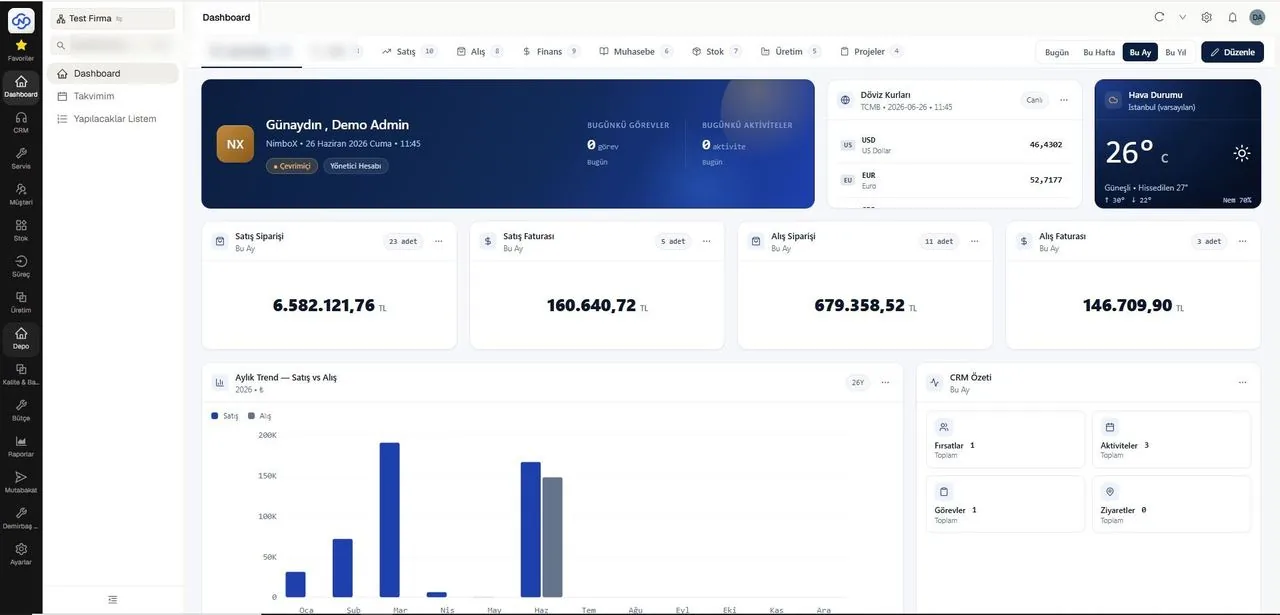

Examples from Nimbo integrated solution screens running directly on the Mikro database.
The building blocks of a Plastics setup




How familiar does this look?
Tick the situations we see most often in Plastics that apply to you.
Common questions
Can we track customer-owned moulds?
Yes. Ownership, location and cycle counts are tracked, including maintenance due by cycles rather than by date.
How is regrind handled?
As its own stock item, returned to stock and blended back according to the recipe rules you define.
Can we compare theoretical and actual consumption?
Yes, per production run — which is usually where unexplained material loss becomes visible.
Let’s design your Plastics setup together
Tell us how you work, and we will map out the Mikro + Nimbo roadmap and the right combination of modules for your industry.