

Does RPA Make Sense for SMEs? When Is It Needed?
What Is RPA and What Does It Mean for SMEs?
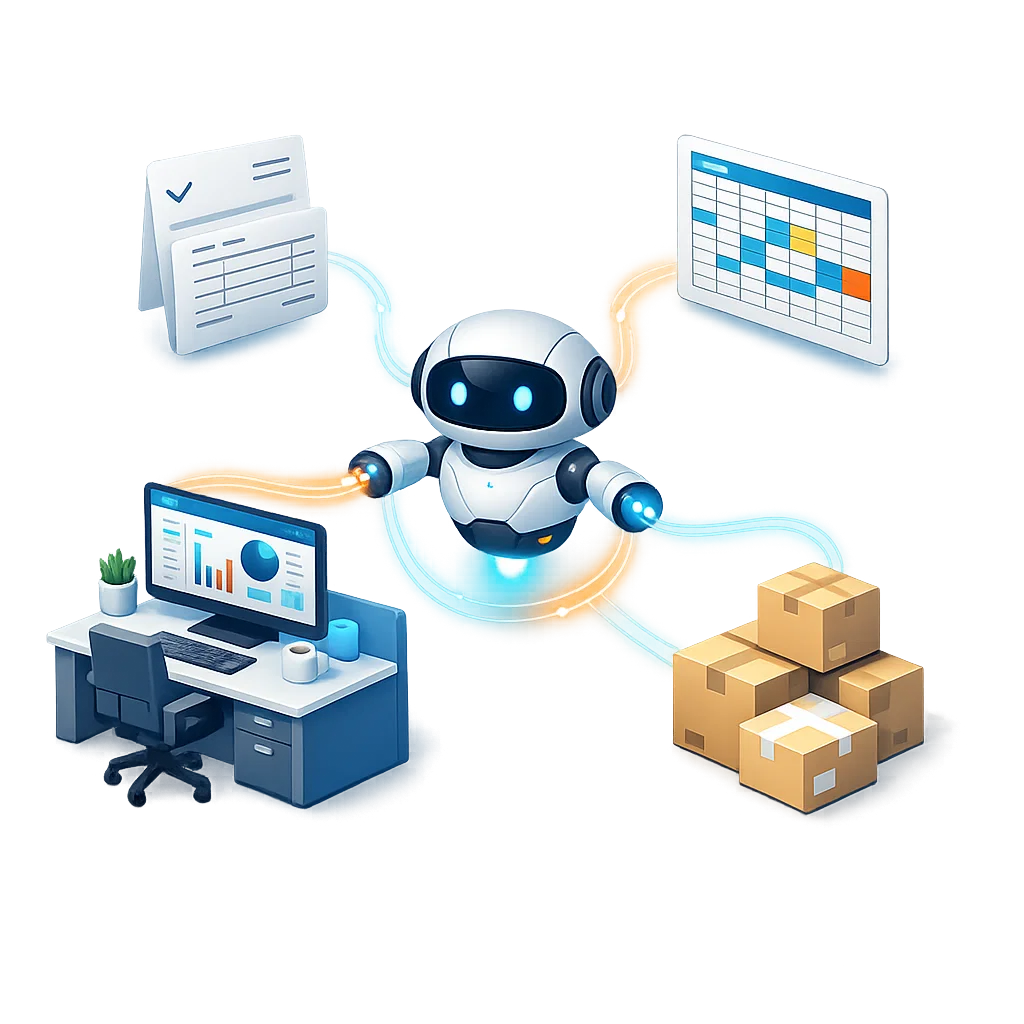
RPA is a technology that automates repetitive, rule-based tasks through software robots. When tasks such as accounting entries, invoice processing, order transfer and stock updates are carried out manually, both time loss and risk of errors arise.
At this point RPA steps in, automating processes and minimizing human intervention.
When Does RPA Make Sense for SMEs?
An RPA investment makes sense if the following situations apply:
- If the same data is entered repeatedly into different systems
- If accounting and e-invoice tasks are carried out manually
- If heavy data transfer is done through Excel
- If workload is growing but headcount stays constant
- If reporting processes take a lot of time
At this point, RPA delivers time savings and an increase in operational speed in a short time.
RPA Is More Effective for SMEs with an ERP Infrastructure
For many SMEs, the first step should usually be setting up an ERP infrastructure. Having data collected in a central system is critically important for automation to work efficiently.
For example, companies that use the Mikro infrastructure can manage their processes in an integrated way with Mikro Software Solutions. Once such central systems are in place, RPA integration proceeds in a much healthier way.
RPA is not an alternative to the ERP; it is its complement.
Concrete Advantages of RPA for SMEs
- Time savings
- Reduction in error rates
- Personnel cost optimization
- 24/7 uninterrupted processing
- Standardized reporting
For SMEs in the growth phase in particular, these advantages provide serious competitive strength.
Should Every SME Use RPA?
No. If transaction volume is low and manual processes are not straining the business, an RPA investment may not be necessary in the short term.
However, as data volume grows, manual management becomes unsustainable. At this point, business-specific automation scenarios can be planned through the custom software development approach, and the RPA process can be set up properly.
Conclusion: Automation at the Right Time, Controlled Growth
For SMEs, RPA is not a luxury; it is a powerful efficiency tool when introduced at the right time. What matters is to perform a process analysis and identify the areas that are truly suitable for automation.
With proper planning, RPA enables SMEs both to keep their costs under control and to grow faster and more sustainably.
Have a question about something you read?
We are happy to talk it through — no obligation. Request a demo or ask for pricing and our team will get back to you shortly.