

RPA or ERP? What Is the Difference?
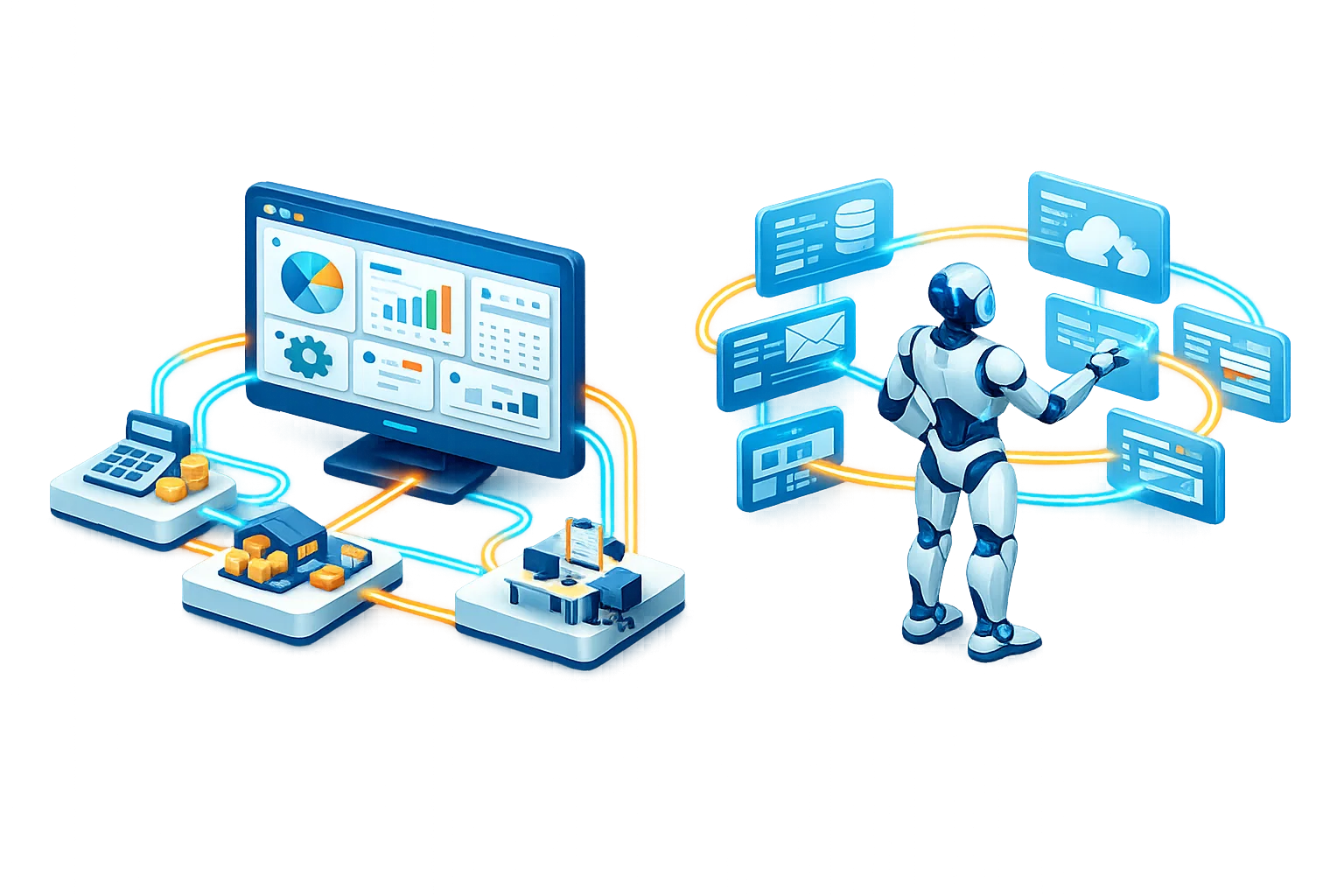
Two of the concepts businesses confuse most during digital transformation are RPA (Robotic Process Automation) and ERP (Enterprise Resource Planning) systems. Both technologies aim to improve business processes; however, their working logic and areas of use are different.
In this article, we cover the key differences between RPA and ERP, which one to choose in which situation, and how they can work together.
What Is ERP?
ERP (Enterprise Resource Planning) is an integrated software infrastructure that allows businesses to manage their core processes such as accounting, inventory, production, human resources and sales through a single system.
ERP systems:
- Collect all data in a central structure
- Ensure data integrity between departments
- Provide financial and operational reporting
- Standardize processes
For example, companies that use the Mikro infrastructure can manage their accounting, inventory and production processes in an integrated way thanks to Mikro Software Solutions.
ERP systems are the "backbone" of the business. Data is created, stored and reported here.
What Is RPA?
RPA (Robotic Process Automation) consists of software robots that run on top of existing systems. It imitates and automates the repetitive tasks people perform at the computer.
RPA systems:
- Perform data entry automatically
- Provide data transfer between systems
- Speed up routine tasks
- Reduce manual errors
For example, tasks such as exporting a report taken from the ERP to Excel or entering data into a web portal can be automated with RPA.
Business-specific automation scenarios, on the other hand, can be integrated into the ERP infrastructure through the custom software development approach.
Key Differences Between RPA and ERP
ERP:
- The main system where data is produced and managed
- Structures processes
- Integrates departments
- Is the corporate data source
RPA:
- Works on top of existing systems
- Automates processes
- Takes over repetitive tasks
- Complements the ERP
With a simple example: ERP records an invoice. RPA transfers that invoice to another system or checks it according to certain rules.
Which Is More Important?
The answer to this question is: It depends on the need.
If your business does not yet have an integrated system, the priority should usually be setting up an ERP infrastructure. However, if you already use an ERP and still transfer data manually, RPA can speed up your processes significantly.
The highest efficiency is achieved by using the two systems together.
What Happens When They Work Together?
Thanks to the ERP + RPA combination:
- Data is kept in the central system
- Manual tasks are automated
- Reporting is standardized
- Operational speed increases
- Human error decreases
This structure creates a scalable and sustainable digital architecture, especially for growing businesses.
Conclusion: ERP Is the Infrastructure, RPA Is the Strengthening Layer
ERP is the core system of the business. RPA is an automation layer that increases the efficiency of that system.
Instead of seeing one as an alternative to the other, they should be considered complementary technologies. With proper planning, both data integrity is ensured and operational processes are carried out with maximum speed and accuracy.
Have a question about something you read?
We are happy to talk it through — no obligation. Request a demo or ask for pricing and our team will get back to you shortly.