

What Is RPA? A Guide to Robotic Process Automation for Businesses
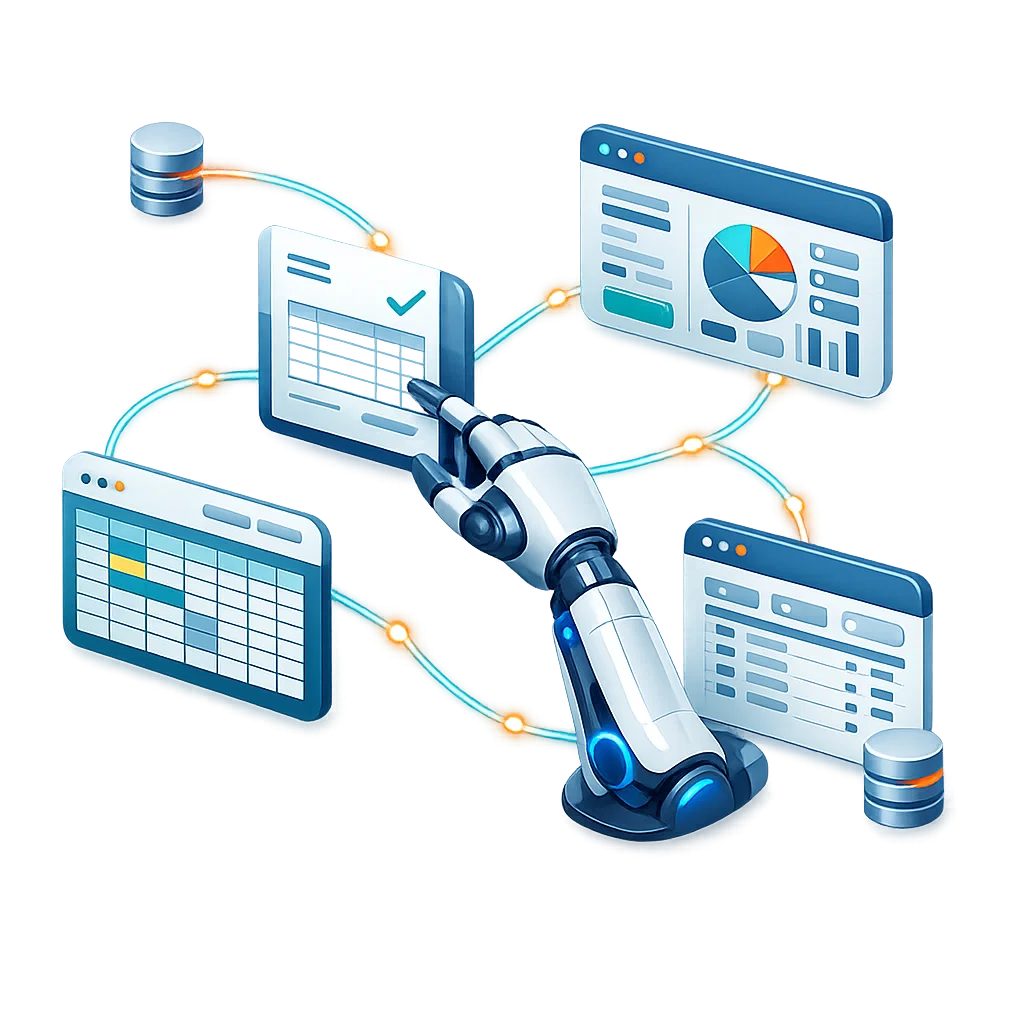
In this guide, we look at how RPA works, which processes it can be used in, and whether it is really necessary for companies that use an ERP.
How Does RPA Work?
RPA software imitates the actions a person performs on a computer. It can log in to an application, read data, write data, download files, create reports and transfer them to another system.
The basic working logic consists of the following steps:
- Analyzing the process
- Defining the rule sets
- Configuring the software robot
- Testing and going live
- Continuous monitoring and optimization
RPA systems are generally integrated without touching existing ERP, accounting or CRM systems. This way, the existing infrastructure is preserved.
Which Tasks Are Suitable for Automation?
RPA delivers high efficiency especially in tasks with the following characteristics:
- Repetitive and routine tasks
- Rule-based decision processes
- High-volume data entry
- Data transfer between different systems
- Invoice, order and report generation processes
For example, tasks such as e-invoice checking, stock updates, bank reconciliation and payroll data transfer are ideal for RPA.
The https://nimboyazilim.com/hizmetlerimiz/ozel-yazilim-gelistirme service, developed within the scope of the custom integration solutions offered by Nimbo Yazılım, allows businesses to build a process-based automation infrastructure.
Is RPA Necessary for Companies That Use an ERP?
Many businesses think they do not need automation because they use an ERP system. However, ERP systems provide data management; RPA makes it easier for this data to move automatically between different platforms.
For example:
- Exporting a report taken from the ERP to Excel
- Bulk uploading data from Excel to the bank
- Entering data into a web portal outside the ERP
These are areas that the ERP does not solve within itself. RPA works as a complementary technology to ERP systems.
For companies that use Mikro as their ERP infrastructure, RPA processes can be planned in an integrated way with the solutions on the https://nimboyazilim.com/hizmetlerimiz/mikro-yazilim-cozumleri page.
The Difference Between RPA and Artificial Intelligence
RPA and artificial intelligence are often confused. However, there are important differences between them.
RPA:
- Works on rules
- Follows predefined steps
- Has no ability to learn
Artificial Intelligence:
- Can learn from data
- Can make predictions and analyses
- Builds decision support mechanisms
With a simple example: RPA records an invoice in the system. Artificial intelligence analyzes the payment risk of that invoice.
Maximum efficiency is achieved when these two technologies are used together. For example, data analyzed with the Mikro AI module can be processed automatically through RPA robots.
Conclusion: RPA Is Not a Cost, It Is an Investment in Efficiency
Robotic Process Automation means not only labor savings for businesses; it also means error reduction, speed gains and process transparency.
RPA solutions provide a serious competitive advantage especially for accounting, production and logistics companies that work with heavy data.
With the right analysis and the right integration, RPA increases the value of your existing ERP system and accelerates your digital transformation process.
Have a question about something you read?
We are happy to talk it through — no obligation. Request a demo or ask for pricing and our team will get back to you shortly.