

Cost of Digitalization for SMEs: A 12-Step Calculation
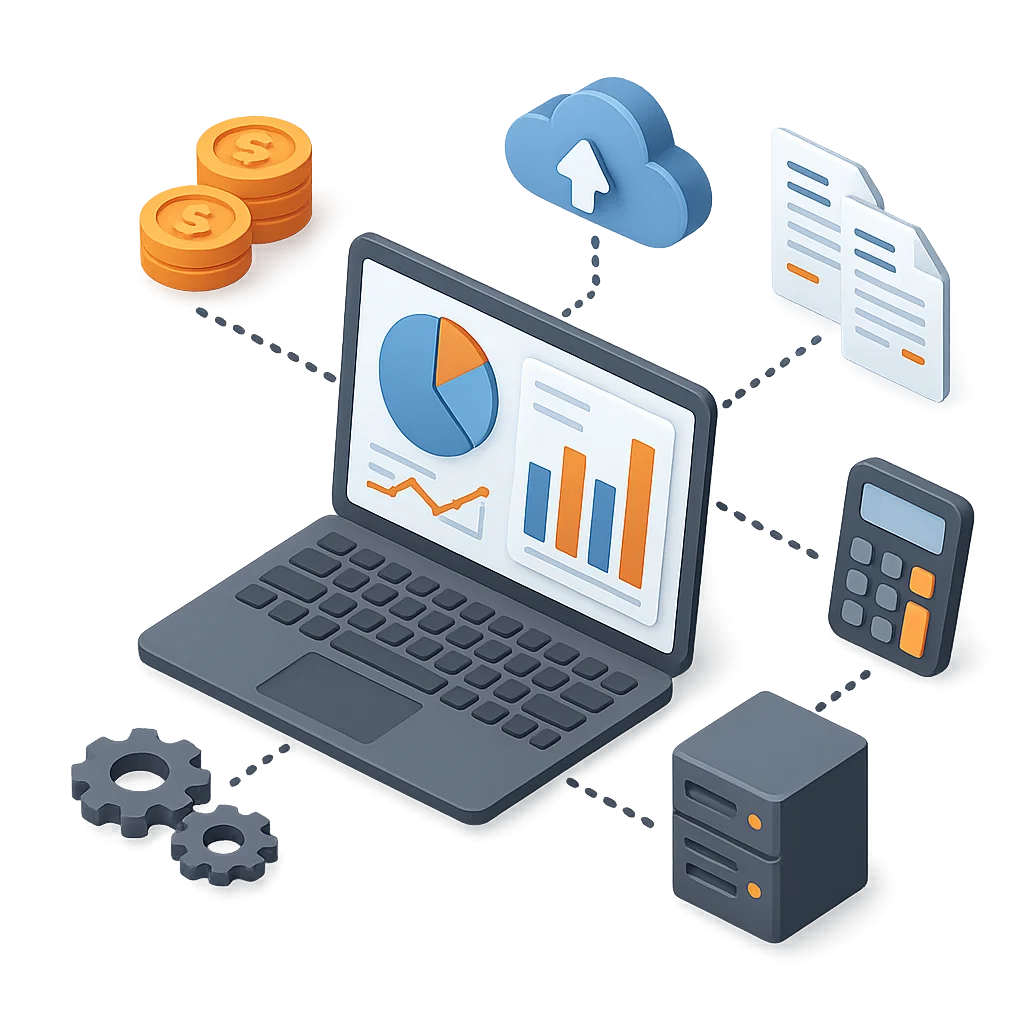
In this article, we explain how SMEs can calculate the cost of digital transformation in 12 steps.
1. Current State Analysis
The first step is to analyze existing systems correctly.
- Which processes are manual and which are digital?
- Which software is up to date and which is no longer efficient?
This analysis forms the foundation of the digitalization plan.
2. Determining Needs
Every SME's digitalization process is different. For some businesses the priority may be stock tracking, for others e-Invoice, for others CRM. Nimbo Yazılım offers custom digital solution plans suited to your sector and business structure .
3. Hardware Requirements
Hardware matters as much as software. Equipment such as servers, computers, network devices, barcode readers and tablets needs to be updated.
However, not everything has to be physical anymore; you can benefit from virtual server services.
4. Software Licenses and Integrations
ERP, CRM, e-Invoice, e-Waybill, production management, backup... The license fees, annual maintenance fees and integration costs of all these systems should be taken into account.
Nimbo ERP and Mikro Yazılım integrations reduce unnecessary costs by running all modules on a single platform.
5. Training and Implementation Process
Employee training is essential for the correct use of new systems. Training time directly affects efficiency.
Nimbo Training Services provide users with step-by-step hands-on training support.
6. Data Security and Backup Cost
Data loss can be the biggest risk of digitalization. For this reason, firewall, antivirus, secure email and backup solutions are necessary.
Nimbo Cloud Backup protects your data with an automatic backup system.
7. Strengthening the Infrastructure
Elements such as internet speed, network connections, cabling and Wi-Fi coverage may need to be improved.
These investments are made once, but they ensure the system runs stably in the long term.
8. Integration and Automation Setup
Many businesses use different systems separately. Yet ERP, CRM and e-transformation systems need to be integrated.
Nimbo Integration Services save time by automating data flow.
9. Cloud Hosting or Server Rental
SMEs turning to cloud hosting solutions instead of setting up physical servers reduces the initial investment cost. Thanks to the Mikro Cloud Program service offered by Nimbo, you can securely access Mikro Yazılım products from anywhere you have an internet connection. With its secure, redundant and scalable structure, this provides a balance between cost and efficiency.
10. Technical Support and Maintenance
Regular maintenance and support services are required for the continuity of systems. Support cost varies according to the size of the system and the number of users.
Nimbo Technical Support Team offers 24/7 monitoring and remote access services.
11. Digital Marketing and Web Management
Digitalization is not limited to internal processes. Investment is also needed in areas such as website, SEO, e-commerce and advertising management.
Nimbo Web and Digital Services take your brand online and form the outward-facing side of digital transformation.
12. Return on Total Investment (ROI)
In the final step, the return on the investments made should be analyzed. The ROI (Return on Investment) ratio is derived by calculating the time, labor and error reduction rates provided by MES, ERP or CRM systems.
The return on digital transformation can usually be seen clearly within 6 to 18 months.
Conclusion
The cost of digitalization is not an expense; it is an investment in the future. By planning step by step, SMEs can manage this process and get ahead in competition.
Nimbo Yazılım stands by SMEs in their digital transformation process at all stages, from analysis to setup, from integration to support services.
Have a question about something you read?
We are happy to talk it through — no obligation. Request a demo or ask for pricing and our team will get back to you shortly.